

How to Measure Your Dachshund for a Harness (The Right Way)
If you’ve ever wondered why one harness fits beautifully while another rubs, twists or just doesn’t seem quite right, the answer often comes down to one simple thing…
The measurements.
But here’s the catch.
It’s not just what you measure – it’s where you measure.
After fitting hundreds of dachshunds through our online store, markets, product testing and private fitting studio, we’ve learnt that measuring in the wrong spot can be the difference between choosing the perfect size and ending up with a harness that simply isn’t right.
This guide will show you exactly how we measure dachshunds at Lazy Doxie Co, and why it’s a little different from what you might expect.
Why Measuring Matters
A well-fitted harness isn’t just about looking good.
The right fit helps provide:
- Comfort on every walk
- Freedom of movement
- Reduced rubbing and chafing
- Better security
- A safer walking experience for your dachshund
A poorly fitted harness can slide around, rub behind the legs, allow your dog to back out, or simply make walking uncomfortable.
Taking just a couple of minutes to measure properly can save a lot of frustration later.
The Biggest Mistake We See
The most common mistake isn’t using the wrong tape measure.
It’s measuring the right body part in the wrong place.
For example…
Many people naturally measure their dog’s neck where they would wear a collar.
A harness doesn’t sit there.
A harness sits much lower on the neck, close to the sternum (breastbone).
Believe it or not, we’ve seen the difference between these two measuring positions be as much as 10cm.
That’s often enough to completely change the size your dachshund needs.
Every Dachshund Is Different
One thing we’ve learnt over the years is this:
There is no such thing as a “standard” dachshund.
We’ve fitted:
- Two dachshunds that weigh exactly the same but wear different harness sizes.
- Littermates needing completely different sizes.
- Dogs that look much bigger than they are but actually fit a smaller harness because of their body shape.
- Owners convinced their dachshund needed a Medium based on weight alone, only to discover their measurements put them comfortably into a Small.
That’s why we never recommend choosing a harness based on weight alone.
Instead, we look at the whole picture:
- Neck measurement
- Waist (chest) measurement
- Weight
- Overall body shape
Together, these tell us far more than any single number ever could.
What You’ll Need
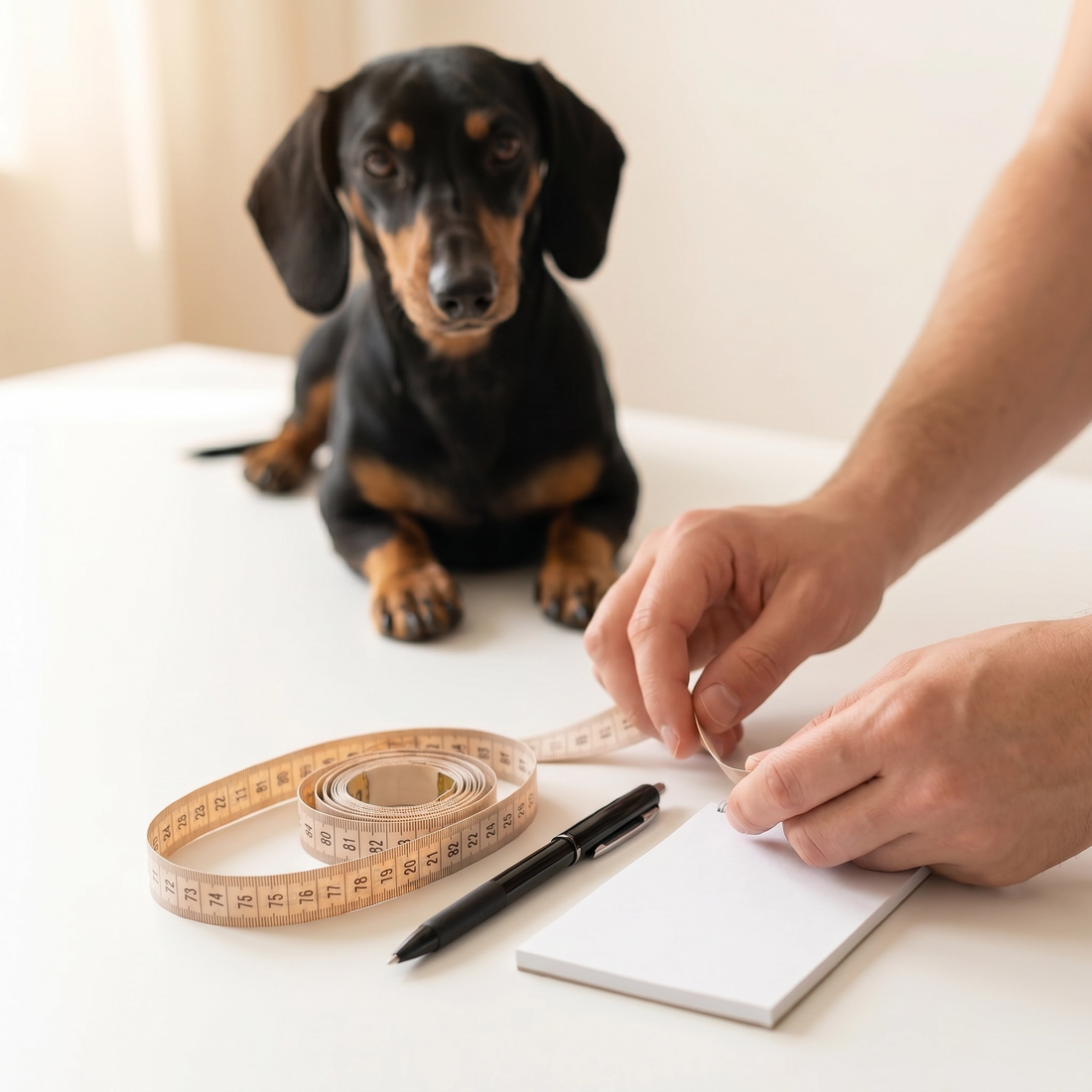
- A soft fabric tape measure
- Your dachshund standing naturally
- A few treats don’t hurt!
Your dog should be standing, not sitting or curled up.
A second person can be helpful if your pup likes to wiggle.
Step 1: Measure the Neck
This is the measurement that catches most people out.
Start at your dachshund’s sternum (breastbone) and measure around the lowest part of the neck where the harness will actually sit.
Do not measure where a collar sits.
Keep the tape flat against the body.
It should be firm but not tight enough to dig into the skin.
Step 2: Measure the Waist (Chest)
This is the measurement we consider the most important.
Stand your dachshund side-on.
Find the deepest part of their chest just behind the front legs — the lowest part closest to the ground.
Measure all the way around this point in a complete circumference.
Again, keep the tape:
- Flat
- Firm
- Snug, but not tight
This measurement gives us the best indication of your dachshund’s overall harness size.
Compare Your Measurements
Once you have your:
- Neck measurement
- Waist measurement
Compare them against our size chart.
If you’re unsure, don’t just guess.
This is where weight and body shape become incredibly helpful.
Sometimes a dachshund with slightly larger measurements but a slim build will suit one size, while another dog with similar measurements but a broader, more solid frame will be more comfortable sizing up.
What If My Dachshund Is Between Sizes?
This is actually quite common.
When we’re helping customers choose a size, we don’t just look at the tape measure.
We also look at:
- Overall build
- Chest shape
- Age
- Weight
- Body condition
For dogs that are broader through the middle or where we’d like a little more chest plate length, we’ll often recommend sizing up.
Our harnesses have overlapping adjustment ranges, so we can usually achieve an excellent fit while giving your dachshund that little extra coverage where it’s needed.
How Do I Know the Harness Fits Properly?
A correctly fitted harness should feel secure without restricting movement.
Here are our quick fit checks:
✔ You should be able to fit two fingers firmly under each strap.
✔ The harness shouldn’t slide around as your dachshund walks.
✔ The waist strap should sit behind the front legs with enough clearance to prevent rubbing.
✔ Your dachshund should be able to move naturally and comfortably.
Don’t Panic About Loose Skin
One thing we hear quite often is:
“It looks like it’s digging into their skin.”
Remember…
Dachshunds were originally bred to burrow.
One of the traits that helped them do this safely is looser skin than many other breeds.
Because of this, their skin can bunch around the harness and make it appear tighter than it actually is.
As long as you can comfortably fit two fingers firmly (not loosely) under the straps, and your dachshund is moving freely, this is usually perfectly normal.
We’re Always Happy to Help
Getting the right fit isn’t about choosing the biggest or smallest harness.
It’s about giving your dachshund the comfort, freedom of movement and safety they deserve every time you head out for a walk.
If you’re ever unsure about your measurements, send them through to us along with your pup’s weight and a couple of photos.
We’re always happy to help you choose the right size.
Because at Lazy Doxie Co, we’d much rather spend a few minutes helping you find the perfect fit than have you end up with a harness that isn’t right for your best mate.


